Opening & hardware
Door, frame, lock, egress, power, monitoring, accessibility, environment, and failure behavior.
An access-control decision joins an opening, locking hardware, credential, identity process, controller, network, software, life-safety interface, operating team, and audit trail. Scope the whole chain.
For every door, gate, lift destination, garage, and restricted area, define who needs access, when, with which exception path, what the opening should do during fire alarm, power loss, network loss, and system failure, and who owns daily administration.
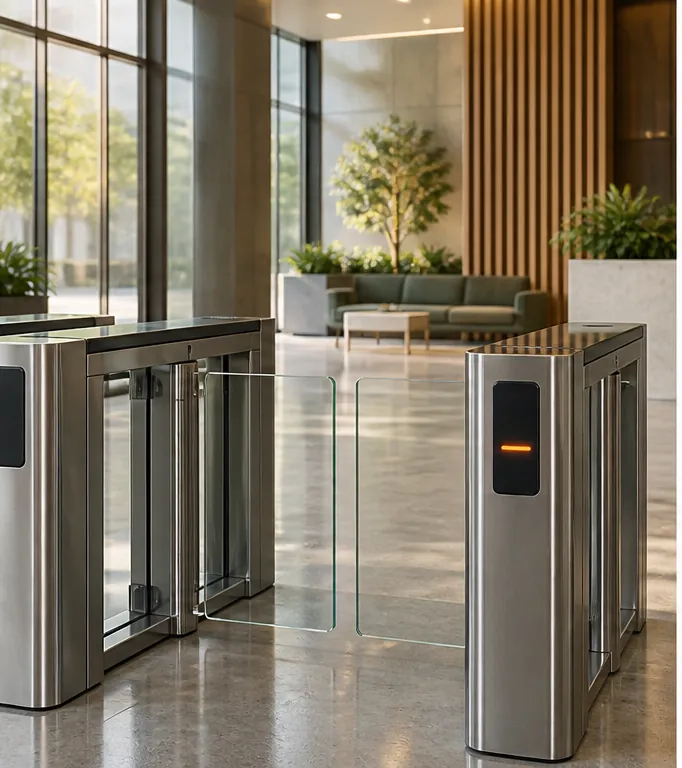
Access path in view
A sound review follows the credential through the decision point and all the way to the physical opening.
 01
01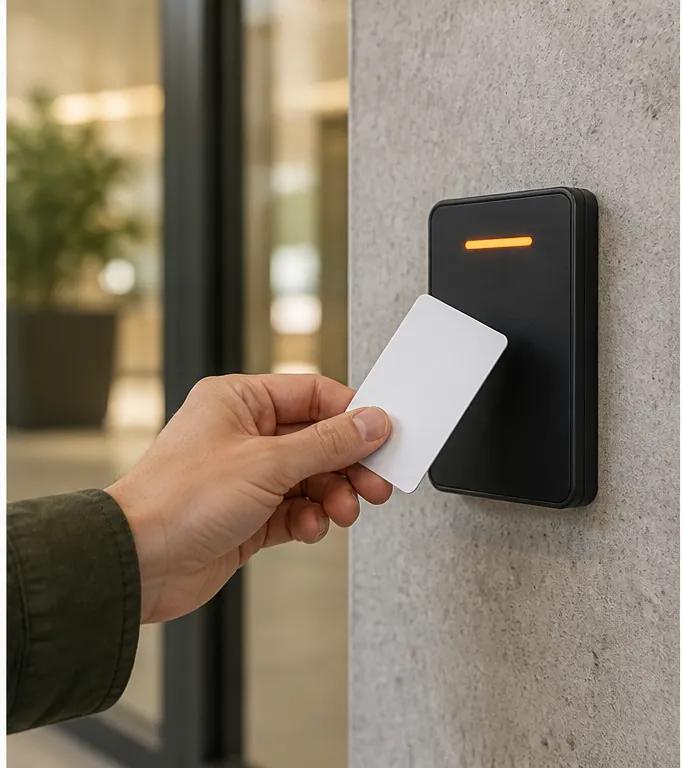 02
02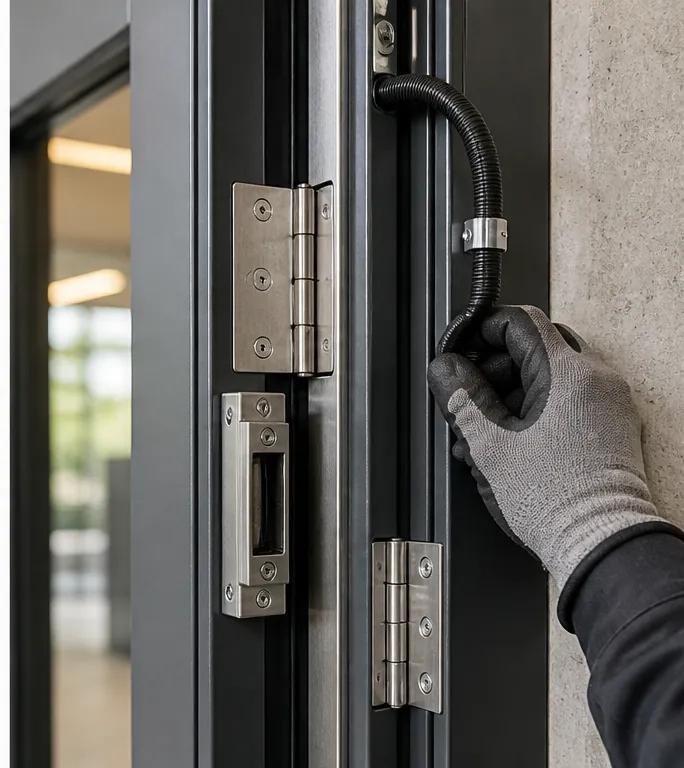 03
03Published 8 September 2026 · reviewed 9 September 2026. Editorial illustrations generated for Hamed Helped; they do not depict a named site, vendor, or client.
Decision criteria
Door, frame, lock, egress, power, monitoring, accessibility, environment, and failure behavior.
Enrollment, proofing, issuance, lifecycle, lost credential, role change, visitor, contractor, and termination.
Where access rules run, what works offline, how time and schedules behave, and who can override.
Video, intercom, visitor, lifts, alarms, identity, HR, tenant systems, mobile wallets, and incident workflows.
Daily changes, exceptions, alarms, investigations, evidence retention, vendor support, and escalation.
Updates, remote access, keys, backups, recovery, device support, data export, and replacement path.
Questions to ask
Map new joiners, tenant changes, visitors, vendors, role changes, terminations, lost credentials, and after-hours exceptions.
Define local decision behavior, cached rights, monitoring, alarms, operator awareness, and restoration.
Require jurisdiction- and design-specific review of egress, door release, fire-alarm interface, overrides, and testing.
Name the source of identity and access rights, synchronization path, conflict handling, and deprovisioning evidence.
List accounts, approval, authentication, duration, monitoring, logging, support purpose, and revocation.
Document credentials, hardware constraints, controller ownership, configuration export, records, keys, and transition support.
Evidence table
| Claim or decision | Evidence | Owner | When checked |
|---|---|---|---|
| Opening behavior | Door schedule, hardware and interface design, failure modes, approved test result | Designer + life-safety stakeholders | Design, commissioning, material change |
| Identity lifecycle | Source-of-truth map, approval rules, joiner/mover/leaver test, exception log | Security + identity owner | Before rollout and periodically |
| Offline operation | Documented behavior and observed test for network, server, cloud, and power loss | Operations + system owner | Commissioning and recovery exercise |
| Remote support | Named accounts, approvals, authentication, session records, review and revocation | System owner + security | Before support access and at review |
| Exit readiness | Configuration, credential, record, hardware, key, and transition inventory | Property owner + procurement | Before contract and at renewal |
Failure modes
Products are listed before people, openings, exceptions, operating roles, and failure behavior are agreed.
A credential form is chosen without mapping identity proofing, phone loss, privacy, offline behavior, and alternatives.
A technical connection exists but ownership, error handling, incident response, support, and evidence do not.
Administration, updates, remote support, records, backups, recovery, and provider exit have no durable owner.
Secure the system
Evidence trail
Primary guidance that includes physical access control systems in OT scope.
Commercial-real-estate research covering security technology priorities, interoperability, and buying considerations.
Industry research on the meeting point of physical and cybersecurity responsibilities.